How to Study for the CCRN: A Plan That Actually Works
A practical, four-step CCRN study plan built around the AACN blueprint — how to map the exam, drill the systems your unit doesn't expose you to, use practice questions the right way, and simulate the real 150-item exam.
Reviewed ·

The CCRN isn’t a test of whether you’re a good ICU nurse — you already are. It’s a test of a specific body of knowledge, weighted a specific way, and the nurses who struggle are almost always the ones who leaned on experience instead of studying the blueprint. Here’s a plan that closes that gap.
Step 1: Map the blueprint
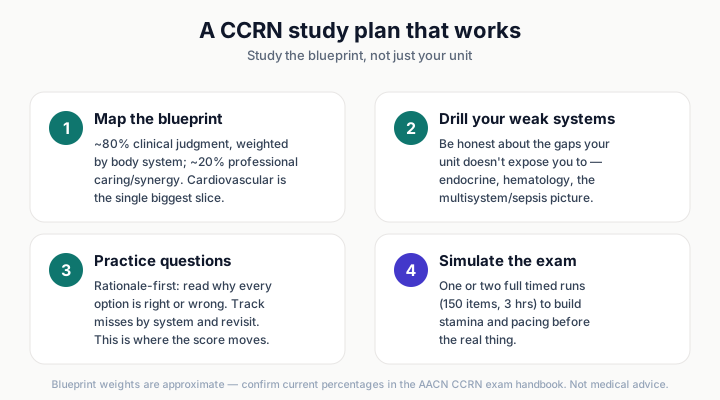
Before you open a review book, understand what the exam actually weights. The CCRN is roughly 80% clinical judgment (organized by body system) and about 20% professional caring and ethical practice (the AACN Synergy Model). Within clinical judgment, cardiovascular is the single largest slice — it’s the highest-yield place to be strong.
Pull the current CCRN exam handbook from AACN and write down the percentage for each section. That list is your study plan — it tells you where the points are.
Confirm the current weights
Blueprint percentages change when AACN revises the exam (the 2025 revision is why pass rates shifted). Always pull the weights from the current AACN handbook rather than an old review book, so you’re studying the exam you’ll actually sit.
Step 2: Drill the systems your unit doesn’t show you
This is the step experienced nurses skip, and it’s the one that costs them. Be honest about your blind spots. If you work a cardiac ICU, you may be shaky on the endocrine emergencies, hematology, or the GI/hepatic content. If you work MICU, maybe it’s the post-cardiac-surgery material. The exam doesn’t care what your unit specializes in — it samples the whole blueprint.
Make a list of the systems you don’t touch often and spend disproportionate time there. Your strong systems need review; your weak systems need actual learning.
Step 3: Practice questions — the right way
Practice questions are where scores move, but only if you use them correctly:
- Go rationale-first. For every question, read why the correct answer is right and why each wrong answer is wrong. The wrong-answer reasoning is often where the real learning is.
- Track your misses by system. If you keep missing endocrine, that’s your signal to go back to step 2 for that system.
- Don’t memorize questions — learn patterns. The exam won’t repeat the item, but it will repeat the concept.
Doing questions is not the same as reviewing them
Blowing through 500 questions and only checking your score teaches you almost nothing. Doing 200 questions and thoroughly working every rationale teaches you the exam. Slow down and mine each item.
Step 4: Simulate the exam
In the last week or two, do one or two full, timed runs — 150 items in 3 hours — to build stamina and pacing. The CCRN is long, and running out of mental gas at question 120 is a real failure mode. A timed simulation also surfaces any pacing problem while you can still fix it.
A realistic timeline
Most nurses do well with 6–8 weeks of consistent study: a couple of weeks mapping and shoring up weak systems, several weeks of rationale-first questions with system tracking, and a final week of simulation and light review of your persistent misses. Steady beats cramming — the volume of material rewards spacing it out.
Keep going
Still deciding if the CCRN is your exam? See CCRN vs PCCN. Nervous about the odds? What the 2025 CCRN pass rate really means. We build certification prep on the same rationale-first approach this plan recommends — see our SCRN bank for how it comes together.
Sources
References
- AACN — CCRN (Adult) exam handbook & blueprint — the authoritative test plan and weights
- AACN — Certification Exam Statistics and Cut Scores — pass rates and passing standard