CCRN Pass Rate 2025: What the Numbers Actually Mean
The 2025 CCRN (Adult) first-time pass rate was 72.02% across 17,151 candidates — down from 81% in 2023. Here's what drove the drop, what the November 2025 cut-score change means, and how worried you should actually be.
Reviewed ·

If you’ve been searching “CCRN pass rate” and getting scared, take a breath. The number dropped, but the story behind it is more reassuring than the headline. Here’s what the 2025 data actually says — and what it means for you.
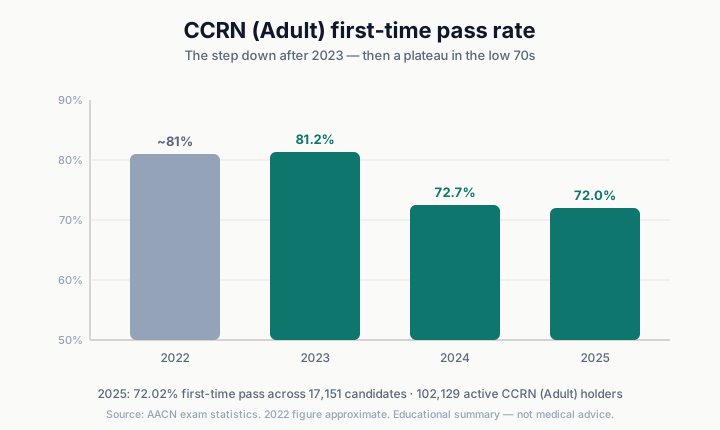
The 2025 numbers
For the CCRN (Adult) exam in 2025:
- First-time pass rate: 72.02%, based on 17,151 candidates.
- 102,129 active CCRN (Adult) certificants — it remains the most widely held critical-care nursing credential in the U.S.
So roughly seven in ten first-time test-takers pass. That’s a solidly passable exam, not a wall.
Why the drop from 2023?
The eye-catching part is the trend: the pass rate fell from 81.2% in 2023 to 72.7% in 2024, then held at 72.02% in 2025 — about a nine-point step down that then plateaued. A single-year drop of that size, followed by stability, usually points to a change in the exam itself rather than a sudden decline in nurses.
That fits the timeline. AACN periodically updates the CCRN test plan (blueprint) from a new job analysis, and a revised exam launched in this window. When the blueprint changes, pass rates typically dip while prep resources catch up, then stabilize — which is exactly the shape of the curve.
A plateau is good news
A rate that dropped once and then held steady (72.7% → 72.0%) is a re-based normal, not a downward spiral. You’re studying for a stable target, not a moving one.
The November 2025 cut-score change
On November 12, 2025, AACN launched revised CCRN exams and adjusted the passing standard — the reported cut score moved from 87 to 83 out of 125 scored items. That’s not the exam being “made easier” so much as the passing bar being re-set to match the new blueprint’s difficulty, which is standard psychometric practice after a revision. The scored-item structure (125 scored items plus 25 unscored pretest items, 150 total, in a 3-hour window) is unchanged.
Don't over-read cut scores
The CCRN is scaled and equated, so “how many questions do I need right” isn’t a fixed target you can game — it’s adjusted so a pass means the same competency across exam versions. Study to understand the blueprint, not to hit a magic number.
So how worried should you be?
Not very — if you prepare deliberately. A ~72% first-time pass rate means most prepared nurses pass, and the people who struggle most tend to be those who relied on clinical experience alone without studying the blueprint. Critical-care experience helps, but the CCRN tests a specific body of knowledge weighted a specific way, and the gap between “good ICU nurse” and “ready for this exam” is bridged by targeted review.
The practical takeaways:
- ~72% pass first time — it’s very much doable.
- The drop was a blueprint re-base, then a plateau — you’re aiming at a stable target.
- Study the blueprint, not just your unit — that’s what separates passers from re-takers.
Keep going
Deciding which exam is even right for you? See CCRN vs PCCN: which critical-care certification. Ready to prepare? How to study for the CCRN lays out a plan. And for the same rationale-first prep applied to stroke certification, see our SCRN bank.
Sources
References
- AACN — Certification Exam Statistics and Cut Scores — the primary source for pass rates and cut scores
- AACN — Revised CCRN Exams (Nov. 2025) — the blueprint revision and cut-score change