Shift Food That Survives a Locker: Five Things to Prep on Sunday
Hospital food design assumes a lunch break. You get nine minutes, a fridge someone else has filled, and a microwave with a queue. Five things that hold up under those constraints — plus what to stop bothering with.
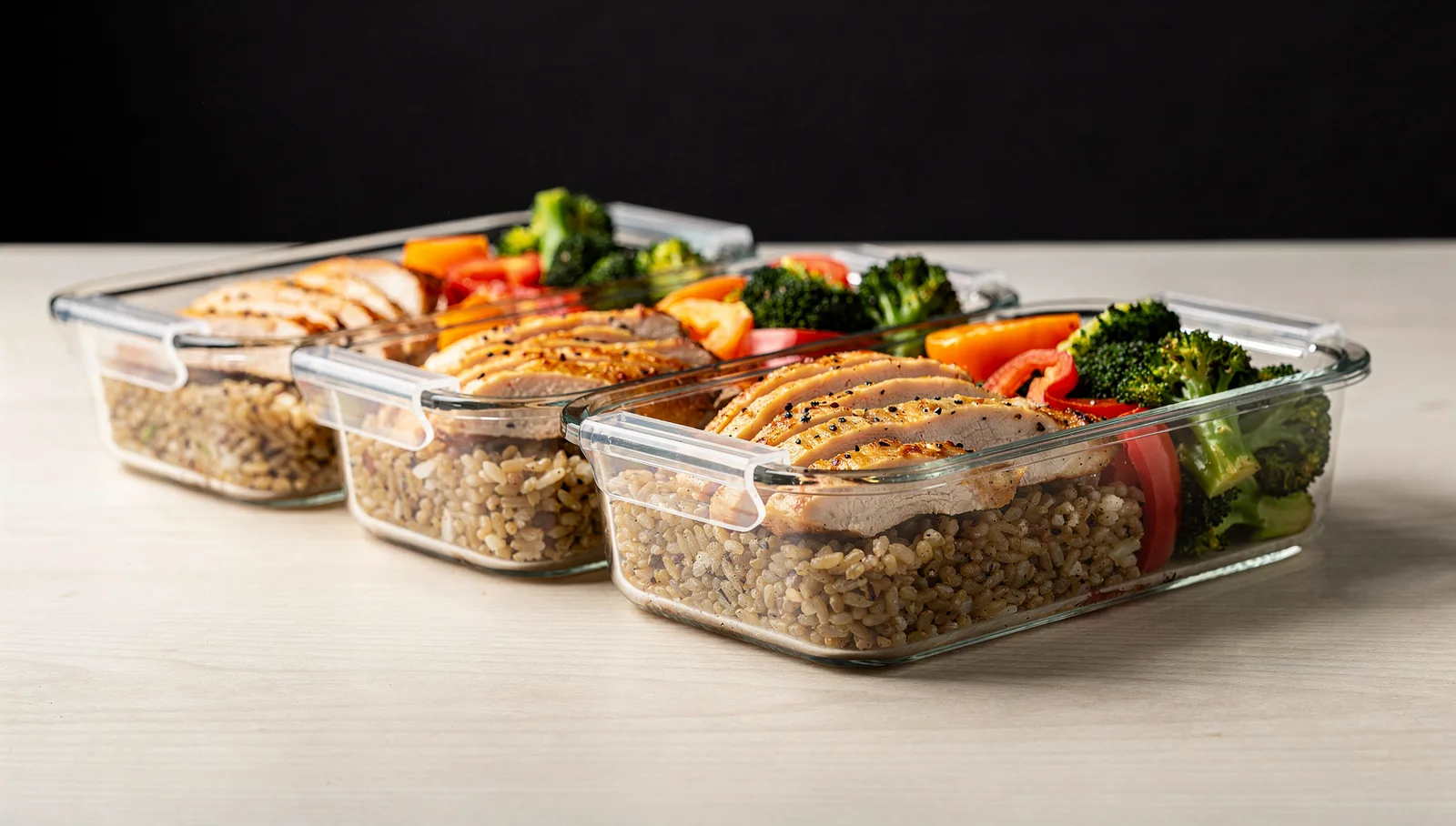
Most meal-prep advice is written for someone with a desk, a lunch hour and a fridge they control. On a ward you have a locker, a shared fridge that may or may not have space, a microwave with a queue, and an eating window that arrives without warning and closes in nine minutes.
So the constraint isn’t nutrition. It’s whether the food still works after eight hours in a bag, and whether you can eat it standing up with one hand.
Five things that survive that. Each takes about twenty minutes on a day off and covers three or four shifts.
The rule that governs all of this
If it needs assembling at work, reheating twice, or a fork and a knife, it won’t get eaten. Prep to the point where the only remaining step is opening it.
1. Baked oats you can eat cold, in a slice
Porridge is a terrible shift food — it needs cooking, a bowl, and it goes to concrete. Baked oats are the same ingredients in a form you can hold.
Mix 300 g rolled oats, 2 eggs, 500 ml milk, 2 mashed bananas, 2 tsp cinnamon and a handful of whatever else (frozen berries, chopped apple, peanut butter). Into a lined tin, 180°C for 30 minutes. Cool, cut into six.
Keeps five days in the fridge and freezes. Eat it cold out of foil at 0400 and it holds together. About 300 kcal a slice with real protein in it, which porridge alone doesn’t give you.
2. A jar salad that hasn’t gone limp by 1400
Salad in a box is soggy by the time you get to it. Salad in a jar, layered correctly, is not — and the ordering is the entire trick.
Bottom to top: dressing, then hard vegetables (carrot, pepper, cucumber, red onion), then grains or pulses (couscous, chickpeas, lentils), then protein (chicken, feta, boiled eggs), then leaves at the very top, pressed in dry.
Leaves never touch the dressing until you tip it into a bowl or shake the jar. Four days in the fridge, and it genuinely still crunches.
3. Soup in a flask — the thing you can eat in nine minutes
This is the one that earns its place on a bad shift. No microwave queue, no plate, drinkable one-handed.
Any thick soup works: lentil, sweet potato and red pepper, chicken and orzo. Make a large batch, freeze in portions, and reheat properly hot in the morning — a pre-warmed vacuum flask will still be hot eight hours later.
Two practical notes. Blend it smoother than you would at home, so it drinks rather than needs a spoon. And thicker is better: it holds heat longer and doesn’t slop.
4. Frittata squares, which are basically portable protein
Eggs are the most useful thing in a nurse’s fridge. Six or eight of them, whatever vegetables are past their best, and any hard cheese.
Sauté onion and whatever else, pour over seasoned beaten eggs, bake at 180°C for 25 minutes in a lined tin, cool completely, cut into squares.
Cold frittata is genuinely nicer than reheated. Four days in the fridge, eaten with one hand, and around 12 g of protein per square — which matters more than it sounds at hour ten, when the vending machine is offering you a sugar spike and a crash ninety minutes later.
5. A snack box that isn’t the vending machine
The vending machine wins by default because it’s there and you’re depleted. The counter to that is having something equally available that doesn’t drop you an hour later.
Prep four small containers at the start of the week, each with a protein, a fat and a carbohydrate: boiled eggs and oatcakes; cheese, apple and almonds; hummus, carrot and pitta; Greek yoghurt, nuts and honey.
The point isn’t the specific combination. It’s that fifteen minutes of prep removes the moment where you’re standing in front of the machine with £1.20 and no plan.
Night shift changes what your gut will accept
Digestion is slower overnight — it’s on the same clock as everything else. Large, heavy, high-fat meals at 0200 sit badly and are a common cause of the reflux nurses accept as normal. Smaller and more frequent generally works better, with the biggest meal before the shift rather than in the middle of it.
What to stop bothering with
Anything reliant on the ward microwave. One microwave, twelve staff, nine minutes. Cold-edible food is strictly better.
Leafy salads as a main. Not enough calories to get you to hour twelve, and you’ll be at the machine by 1500.
Five identical containers on a Sunday. By Wednesday you won’t eat it and you’ll buy lunch. Two or three things rotating beats one thing five times.
Anything needing a knife. You will be eating standing up.
The short version
- Prep to zero remaining steps. Assembly at work means it won’t be eaten.
- Cold-edible beats reheatable, because the microwave has a queue.
- Layer jar salads dressing-first, leaves last.
- A flask of soup is the most reliable thing on the list.
- Protein at every eating window; sugar alone buys ninety minutes.
- Biggest meal before a night shift, not during it.
Keep going
More in recipes, and the wider section at wellness.
Sources
References
- British Dietetic Association — Shift Work and Diet — meal timing guidance specific to working nights
- NHS Employers — Nutrition and hydration for shift workers — practical workplace guidance on eating windows and access to food
- CDC / NIOSH — Nutrition for Shift Workers — why overnight digestion differs and what to do about it