Sleeping After Nights: What Actually Works
Night shift asks your body to do something it is built to resist. You can't fix that, but you can stop fighting yourself — light, timing, caffeine, and the one risk on the list that actually kills nurses.
Reviewed ·
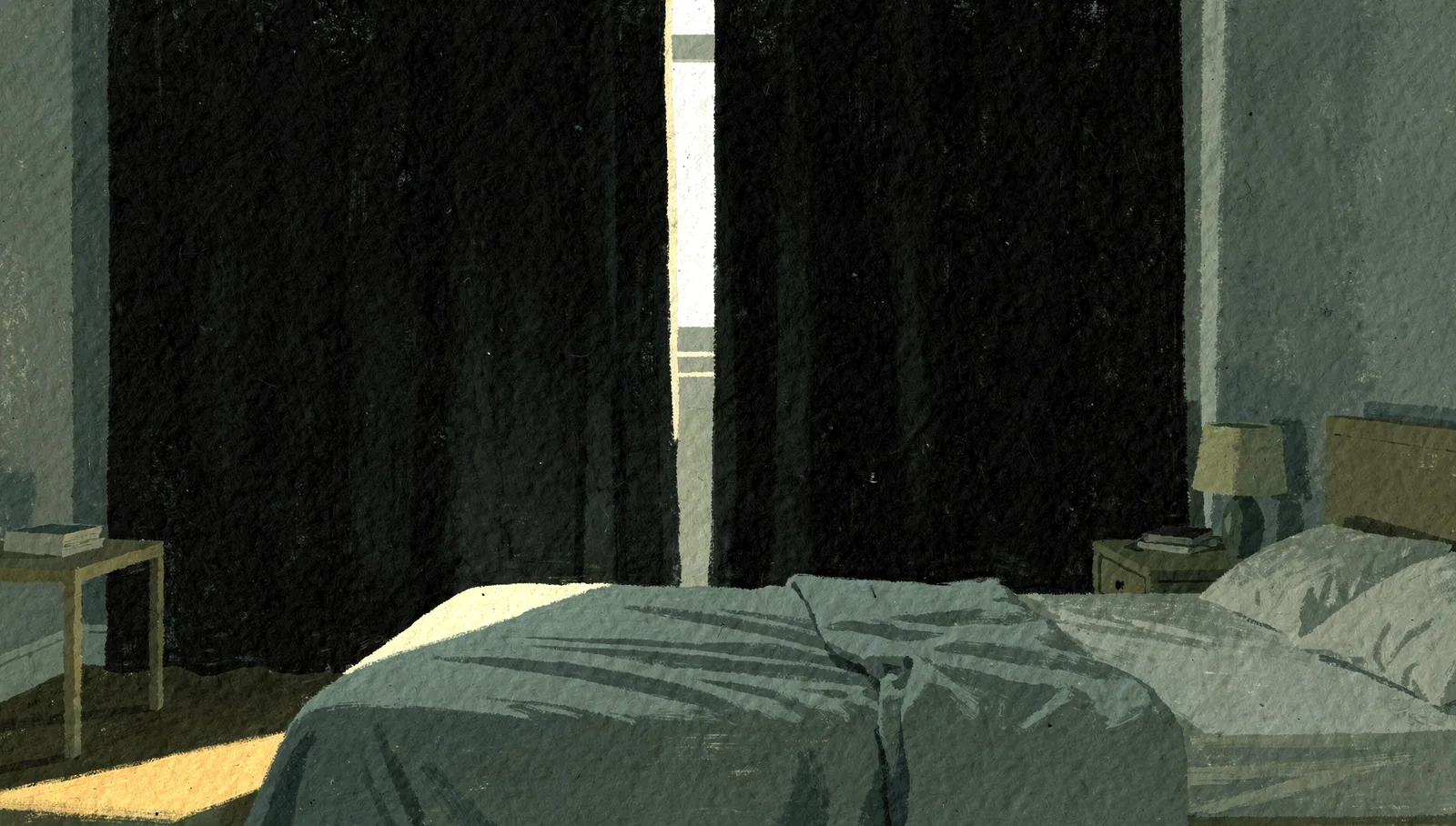
There is no version of night shift that your body signs off on. Your circadian rhythm is driven largely by light, it took a very long time to evolve, and it is not persuaded by your rota. Most sleep advice written for day workers — keep a consistent schedule, sleep when it’s dark — is either useless or faintly insulting when you’re driving home at 0730.
So this isn’t a plan to make nights feel good. It’s a set of things that reduce the damage, and an honest note about which one matters most.
The drive home is the part people underrate
The highest-stakes moment of a night shift usually happens after it ends.
Being awake for around 24 hours impairs performance comparably to being over the drink-drive limit, and the drive home lands exactly when your circadian rhythm is pushing hardest for sleep. Microsleeps at the wheel don’t feel like falling asleep — they feel like arriving somewhere with no memory of the last mile.
Take this one seriously even if you skip the rest
If you’re fighting your eyes on the way home, that isn’t something to push through. Pull over and sleep for twenty minutes. Public transport, a lift, or a nap in the car park before you set off are all better outcomes than the alternative. Nurses die doing this, and it’s the most preventable risk on the whole list.
Light is the lever
If you change one thing about how you handle nights, make it light exposure — the strongest signal your body clock takes, and the one you have most control over.
On the way home, wear sunglasses. Morning light is the most emphatic “it’s daytime, wake up” signal there is, and you’re walking through it immediately before trying to sleep. Dark glasses from the car park onward blunt it considerably. It looks a bit much. It works.
Make the bedroom genuinely dark. Not curtains-dark — properly dark. Blackout blinds, a sleep mask, or both. Light on your face at 1100 tells your brain the same thing an alarm would.
Get bright light during the shift, especially in the first half. It helps hold you on the schedule you’re actually working.
Timing: pick a pattern and defend it
Two approaches work. The wrong move is drifting between them at random.
Sleep soon after you get home. Straight to bed, taking the long block while sleep pressure is highest. You wake in the afternoon and still have an evening. Tends to suit a run of several nights.
Or split it. A shorter sleep in the morning, then a second block before the next shift. Often better if you have children, daytime commitments, or you simply can’t stay asleep past midday.
Either is fine. What doesn’t work is doing one on Monday and the other on Tuesday — you spend the whole stretch never fully adapted to anything.
Protect the pre-shift sleep above all others
If the day falls apart and you only get one decent block, make it the one right before you go back in. That’s the sleep determining whether you’re safe with patients tonight, and it’s the one most likely to be given away to errands, family, and daylight.
Caffeine has a half-life, and it’s longer than you think
Caffeine’s half-life is roughly five to six hours, so a coffee at 0300 still has a meaningful amount circulating when you’re trying to sleep at 0800. It doesn’t stop you sleeping so much as make the sleep shallower — which is precisely the sleep you can least afford to degrade.
The practical version: front-load it. Use caffeine in the first half of the shift and taper off, stopping several hours before you plan to sleep. A 20-minute nap with a coffee timed at the start of it beats a fourth cup at 0500.
The bit nobody writes down
Rotating shift work is associated with cardiovascular and metabolic risk, has been classified as a probable carcinogen, and reliably wrecks your social life. That isn’t a reason to panic — plenty of people work nights for decades — but it is a reason to stop treating tiredness as a personal failing.
You are not bad at sleeping. You are doing something genuinely hard on human physiology, in a job where mistakes matter. Treating sleep as part of your clinical practice rather than a lifestyle nicety is the shift that makes the rest of it feel less optional.
If sleep problems persist through your days off, or you’re falling asleep unintentionally, that’s worth raising with a doctor rather than absorbing. Shift work sleep disorder is a real diagnosis with real management.
The short version
- Don’t drive home impaired. Nap first if you need to.
- Sunglasses on the way home; the bedroom properly dark.
- Pick one sleep pattern for a run of nights and hold it.
- Front-load caffeine, stop early.
- Protect the sleep immediately before your next shift over every other block.
Keep going
More in self-care, and the wider section at wellness.
Sources
References
- CDC / NIOSH — Training for Nurses on Shift Work and Long Work Hours — the standard occupational reference for nurses working nights
- AASM — Shift Work Sleep Disorder — when disrupted sleep becomes a diagnosable disorder
- IARC — Night Shift Work Monograph — the classification and the evidence behind it